Emergency Roof Repair Brooklyn NY: Safety-First Guide
Emergency Roof Repair in Brooklyn, NY: A Safety-First Response Guide
By: LocalAssistHub Editorial Team · Updated: based on current public safety & code references.
⚠ Safety & Code Compliance Note: Roof work involves fall, electrical, and structural hazards. Do not climb onto a damaged roof. For downed power lines, gas odors, or structural collapse, follow your local utility and emergency guidance and evacuate if needed.
Technical references: OSHA Fall Protection · International Code Council (ICC) · NFPA
If you are searching for emergency roof repair in Brooklyn, NY, the first priority is not the roof — it is the people under it. Brooklyn’s dense rowhouse, brownstone, and multi-family housing stock means a single compromised roof can quickly affect shared walls, ceilings, and electrical systems in neighboring units.
Quick answer: If you see sagging, active water intrusion near wiring, or a partial collapse, leave the affected area and call 911 or your utility first. For active leaks without structural or electrical danger, contact a licensed roofing contractor for same-day emergency dispatch. Do not attempt temporary repairs from the roof surface yourself.
This guide explains how to triage roof damage, when to escalate to emergency dispatch, and what to expect on cost and timing — using publicly available industry references rather than invented numbers.
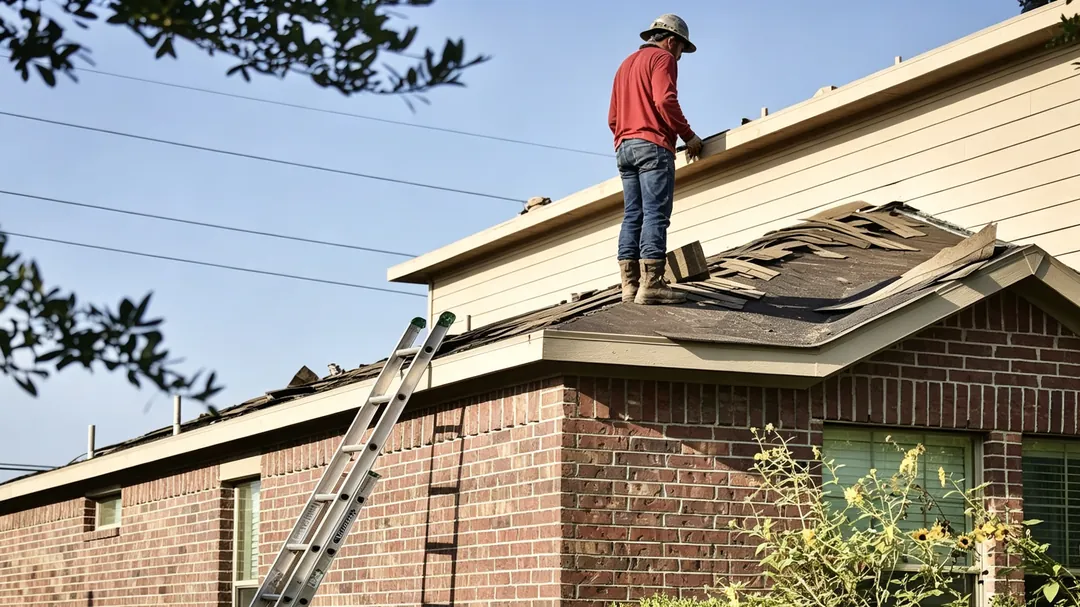
Storm-damaged roof surfaces in dense Brooklyn neighborhoods can allow water to reach shared walls and electrical runs quickly.
Standard Scheduled Service vs. 24/7 Emergency Dispatch
Not every roof problem is an emergency. Understanding the difference helps you avoid unnecessary after-hours callout fees — and helps you recognize when waiting is genuinely unsafe.
Factor | Standard Scheduled Service | 24/7 Emergency Dispatch |
|---|---|---|
Typical response window | 1–5 business days | Same day; often within hours |
Hours of operation | Standard business hours | Nights, weekends, holidays |
Primary objective | Full repair or replacement planning | Stabilize, stop water intrusion, prevent escalation |
Callout fee | Usually none or waived with repair | After-hours dispatch premium commonly applies |
Best for | Minor leaks, worn flashing, missing shingles | Active intrusion, structural movement, storm damage |
Common Roof Damage Warning Signs in Brooklyn
Brooklyn roofs face a specific combination of stressors: nor’easters, freeze-thaw cycling, flat and low-slope roofs on multi-family buildings, and aging masonry parapets. Watch for these indicators:
Ceiling stains that grow during rain — a sign water is already past the roof deck.
Missing, lifted, or curling shingles after a wind event.
Granules collecting in gutters or at downspout outlets.
Daylight visible through the roof deck from inside an attic or top-floor unit.
Sagging ceiling or bowed roof line — a structural warning, not a cosmetic one.
Water near light fixtures, outlets, or a breaker panel.
Loose or displaced parapet coping and flashing on brick buildings.
When to Call Emergency Roofing Services
Escalate to emergency dispatch when any of the following are true:
Water is actively entering and cannot be contained with buckets or towels.
Water is anywhere near electrical wiring, fixtures, or panels.
The roof structure appears to be sagging, cracking, or separating.
Debris, a tree limb, or a chimney component has fallen onto the roof.
The building has been declared unsafe or a neighbor’s unit is also affected.
You cannot safely access or inspect the roof yourself.
If there is any risk of collapse or electrical contact, evacuate the affected area and call 911 or your utility before calling a contractor. Follow local utility and emergency guidance.
Emergency assessment focuses on stopping water intrusion and identifying structural or electrical hazards before repair work begins.
Hazard Triage Matrix
Use this matrix to classify what you are seeing. It is a decision aid, not a substitute for professional inspection.
Symptom or Condition | Primary Threat | Urgency | Immediate Action |
|---|---|---|---|
Sagging or collapsing roof section; visible structural deformation | Structural failure, injury | CRITICAL | Evacuate the area; call 911; do not re-enter until cleared |
Water contacting wiring, fixtures, or a breaker panel | Electrocution, fire | CRITICAL | Keep away from water and electrical equipment; call 911 or utility |
Active leak through ceiling during rain; spreading stains | Water damage, mold, ceiling collapse | HIGH | Contain water safely from the ground; call 24/7 roof repair |
Missing shingles, lifted flashing, or displaced coping after wind | Progressive water intrusion | MODERATE | Document from the ground; schedule prompt professional repair |
Granule loss, minor staining, or aged sealant | Premature wear | ROUTINE | Schedule a standard inspection and maintenance visit |
💡 Field Insight — Based on industry reports
Public safety and standards organizations consistently identify falls as a leading cause of serious injury in construction and maintenance work, and water intrusion as a primary driver of interior property damage and mold growth. OSHA publishes fall-protection requirements for work at height, and the IICRC publishes water-damage remediation standards that emphasize rapid drying to limit secondary damage.
Sources: OSHA Fall Protection · IICRC · NFPA
A simple way to prioritize a roof issue is to score it. This is a generic decision model, not a professional assessment:
Priority Score = (Water Intrusion × 3) + (Structural Movement × 4) + (Electrical Proximity × 5) + (Occupant Risk × 3)
Score each factor 0–3. Higher totals indicate a stronger case for immediate emergency dispatch rather than a scheduled visit.
Actionable Guidance Before Help Arrives
These steps are limited to what is safe from the ground or from inside the building. Do not climb onto a damaged roof.
Move people and pets away from the affected area and any wet electrical fixtures.
Contain water safely with buckets, bins, or towels placed on the floor — never near live electrical equipment.
Clear valuables from beneath the leak and move furniture or electronics away.
Photograph and document damage from a safe position for your records and insurance claim.
Do not use ladders or climb onto wet, wind-damaged, or snow-covered roof surfaces.
Do not attempt tarping or patching on a roof with structural movement, downed lines, or active storm conditions.
Contact your insurance provider to understand your policy’s claim process; do not assume coverage terms.
Types of Roof Repairs
Emergency work usually focuses on stabilization first, then permanent repair. Common repair categories include:
Leak isolation and temporary weatherproofing performed by a professional.
Flashing repair around chimneys, vents, skylights, and parapet walls.
Shingle or membrane replacement in damaged sections.
Gutter and drainage correction to prevent recurring pooling.
Deck and underlayment repair where water has compromised the substrate.
Structural reinforcement where framing or masonry has moved.
How Long Roof Repairs Typically Take
Timelines vary widely with damage extent, roof type, weather, and permit requirements. As general guidance:
Emergency stabilization: often completed during the initial visit.
Targeted leak repair: commonly a single working day.
Section replacement: typically several days depending on scope.
Full replacement: often a multi-day project, subject to permits and inspection.
Brooklyn’s mix of flat, low-slope, and pitched roofs means the contractor must confirm the assembly type before quoting a timeline.
Questions to Ask a Roofing Contractor
Are you licensed and insured to work in New York, and can you provide documentation?
What is your emergency response window, and is there an after-hours callout fee?
Will you separate stabilization work from permanent repair in the estimate?
How will you protect occupants and adjacent units during the work?
What does your written estimate include, and what could change the scope?
Will permits or inspections be required for this repair?
🧮 24/7 Service & Cost Estimator
This tool provides a general dispatch-range estimate only. It is guidance, not a binding quote.
Primary symptom:
Active leak through ceiling Missing shingles or flashing Sagging or structural movement Water near electrical
Time of day:
Business hours After hours Weekend or holiday
Baseline dispatch range: Emergency dispatch pricing typically combines a service callout with labor and materials. After-hours and holiday windows commonly carry a premium. For current regional ranges, see the cost benchmarks below and verify with the contractor before work begins.
Cost Benchmarks
The ranges below are drawn from publicly available national cost references. Actual pricing in Brooklyn depends on building type, access, roof assembly, and scope.
Item | Average Range | Key Cost Drivers |
|---|---|---|
Roof repair (general) | See cited national range | Damage extent, roof material, access, height |
Roof replacement | See cited national range | Square footage, material, removal, permits |
Emergency / after-hours callout | Premium over standard rates | Time of day, urgency, travel, stabilization scope |
Leak detection and inspection | See cited national range | Access, roof type, diagnostic complexity |
Source for national cost ranges: HomeAdvisor — Roof Repair Cost. Always confirm local pricing directly with a licensed contractor.
Frequently Asked Questions
What should I do immediately if my roof is leaking in Brooklyn?
Move people and pets away from the affected area, especially near electrical fixtures. Contain water safely from the floor, document damage from a safe position, and contact a licensed roofing contractor for emergency dispatch. If water is near wiring or the structure appears to be moving, evacuate and call 911 or your utility first.
How long does emergency roof repair service take to arrive?
Response windows vary by contractor, weather, and demand. Many emergency services advertise same-day response, with arrival often within hours. Confirm the expected window and any after-hours callout fee when you call.
Is this safe to handle myself?
No. Roof work involves serious fall, electrical, and structural hazards. OSHA publishes fall-protection requirements for work at height, and untrained roof access is a leading cause of severe injury. Limit yourself to safe, ground-level actions and leave roof work to a licensed professional.
Will my insurance cover emergency roof repair?
Coverage depends on your specific policy, the cause of damage, and your deductible. LocalAssistHub cannot determine your coverage. Contact your insurer directly and document the damage with photos taken from a safe position.
Can I tarp the roof myself while waiting for a contractor?
Do not climb onto a damaged, wet, or wind-affected roof. Tarping is a task for trained professionals with proper fall protection. If water is entering, focus on interior containment and safe evacuation of valuables.
What causes the most roof emergencies in Brooklyn?
Common causes include high-wind events, freeze-thaw cycling on flat and low-slope roofs, aging flashing around chimneys and parapets, and blocked drainage that causes pooling. Dense multi-family buildings can also spread water damage between units quickly.
How do I choose an emergency roofing contractor?
Ask for proof of licensing and insurance, a written estimate that separates stabilization from permanent repair, and a clear explanation of any after-hours fees. Avoid anyone who demands full payment upfront or cannot provide documentation.
Need emergency roof repair in Brooklyn, NY? Contact a licensed local roofing contractor for same-day dispatch, and follow local utility and emergency guidance if you see structural or electrical hazards.
Author & Technical References
This guide was prepared by the LocalAssistHub Editorial Team using publicly available safety, code, and cost references. It is general information, not a professional inspection, engineering assessment, or insurance determination. Always follow local utility and emergency guidance and consult a licensed professional for your specific situation.
Related Articles
Get Local Home Maintenance Tips
Join homeowners who receive emergency preparedness guides and local service recommendations.
Free Home Emergency Guide PDF included. Unsubscribe anytime.