Chimney Repair Guide: Signs of Damage, Emergency Risks & When To Call a Professional (2026)
Chimney Repair Guide: Signs of Damage, Emergency Risks & When To Call a Professional (2026)
A damaged chimney is one of those home problems that's easy to overlook — until it isn't. What starts as a hairline crack in the mortar can progress to water infiltration, structural deterioration, and in the worst case, a chimney collapse that damages your roof and threatens anyone inside. This guide helps you recognize chimney damage early, understand what causes it, know when the situation requires urgent attention, and find the right professional to perform repairs safely.
LocalAssistHub helps homeowners identify chimney repair service categories and connect with qualified professionals in their area. Because chimneys combine masonry, flashing, flue lining, and structural elements, proper repair requires specialized expertise beyond general contracting.
Quick Answer: What Should You Do If You Suspect Chimney Damage?
If you've noticed crumbling mortar, water stains near your fireplace, or a leaning chimney, take these steps:
Stop using the fireplace: If you suspect structural damage or a damaged flue liner, do not build a fire. A compromised flue can allow carbon monoxide and combustion gases to enter your home.
Inspect from ground level: Look at the chimney from outside — check for visible cracks, missing mortar, leaning, or spalling bricks. Do not climb onto the roof to inspect it yourself.
Check interior walls: Look for water stains, peeling paint, or dampness on walls and ceilings near the chimney — these indicate water penetration through the chimney structure.
Document everything: Photograph visible damage from safe vantage points. Note when you first observed each issue.
Contact a chimney professional: Not a general mason or roofer — chimney repair requires certified specialists who understand flue systems, flashing, and masonry restoration. Look for CSIA (Chimney Safety Institute of America) certified sweeps.
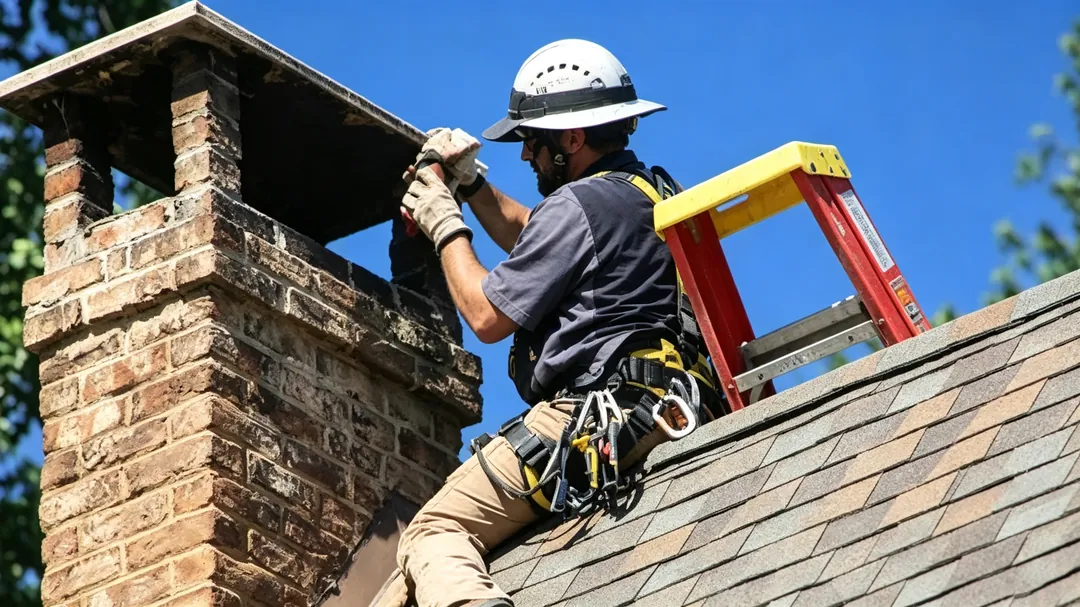
Recognizing Chimney Damage: Warning Signs
Chimney problems develop gradually as weather, aging materials, and normal use take their toll. The earlier you identify warning signs, the less expensive and less invasive repairs will be.
Exterior Warning Signs
The outside of your chimney tells the most visible story about its condition:
Spalling bricks: When the face of bricks pops off or flakes away, the structural integrity of the chimney is compromised. Spalling occurs when moisture penetrates the brick, freezes, and expands — a process called the freeze-thaw cycle. Once spalling begins, it accelerates because more surface area is exposed to water.
Deteriorating mortar joints: The mortar between bricks holds the structure together. When mortar crumbles, cracks, or falls out, the bricks shift and the chimney weakens. Look for recessed, powdery, or missing mortar in the joints.
Cracks in the chimney crown: The crown is the concrete slab at the top of the chimney. Its purpose is to shed water away from the brick structure. Cracks in the crown allow water to enter the chimney interior, where it damages the flue liner, brickwork, and interior walls of your home.
Rusting or damaged chimney cap: The cap sits above the crown and keeps rain, animals, and debris out of the flue. A rusted or missing cap leaves the flue open to water damage and animal intrusion.
Leaning or tilting: If the chimney appears to be pulling away from the house or tilting at the top, the foundation or structural support is failing. This is a serious hazard — a leaning chimney can collapse without warning.
White staining (efflorescence): A powdery white substance on the exterior of the chimney indicates that water is moving through the masonry. Efflorescence is a warning that moisture is penetrating the brick and carrying minerals to the surface as it evaporates.
Missing or damaged flashing: Flashing is the metal seal between the chimney and the roof. Damaged flashing is one of the most common sources of roof leaks near chimneys.
Interior Warning Signs
Inside your home, watch for these indicators of chimney problems:
Water stains on walls or ceilings near the chimney: These stains appear when water penetrates the chimney structure and enters the home. The source could be damaged flashing, a cracked crown, or deteriorated brick.
Damp or musty odors: A chimney that's absorbing water will produce a damp, sometimes moldy smell, particularly after rain. This moisture can also lead to mold growth inside walls near the chimney.
Cracked or damaged fireplace bricks: Interior firebox damage can indicate heat stress, water damage, or structural shifting.
Smoke backing into the room: If smoke doesn't draft properly up the chimney, the flue may be blocked, damaged, or improperly sized. This is a safety hazard — carbon monoxide can enter your home.
Shaling (flakes of flue tile in the firebox): If you find pieces of clay tile in the firebox, the flue liner is deteriorating. A damaged flue liner is a serious fire and carbon monoxide risk.
Pieces of brick or mortar in the fireplace: Falling debris indicates active deterioration of the chimney interior.
What Causes Chimney Damage?
Understanding the cause helps determine the appropriate repair method and whether the underlying issue needs to be addressed to prevent recurrence.
Water and Weather
Water is the single most destructive force for chimneys:
Freeze-thaw cycles: In cold climates, water that penetrates brick and mortar freezes and expands, cracking the masonry from within. Each freeze-thaw cycle worsens the damage. Homes in regions with significant winter temperature swings are particularly vulnerable — the Cincinnati metropolitan area and other parts of the Ohio Valley experience dozens of freeze-thaw cycles each winter, making chimney maintenance especially important there.
Rain and snow: A chimney without a proper cap and crown allows water to run directly down the flue. Over time, this water deteriorates the flue liner, brickwork, and mortar from the inside out.
Wind exposure: Tall chimneys on exposed rooflines face significant wind loads that can stress mortar joints and the chimney-to-roof connection over time.
Construction and Design Issues
Inadequate crown: Many older chimneys have crowns made of the same mortar used for brick joints, rather than a proper concrete crown. Mortar crowns deteriorate quickly and crack, allowing water infiltration.
Missing or undersized cap: A chimney without a cap is open to rain, snow, animals, and debris. Even a cap that's too small or improperly installed provides inadequate protection.
Poor flashing installation: Flashing that was installed incorrectly during construction or has been patched rather than replaced will eventually leak.
Incompatible materials: Mixing different types of brick, mortar, or repair materials can cause accelerated deterioration when materials expand and contract at different rates.
Aging and Use
Thermal stress: Repeated heating from fires and cooling between uses stresses the flue liner and masonry. Over decades, this stress causes cracks and deterioration.
Creosote buildup: Inadequate cleaning allows creosote — a flammable byproduct of combustion — to accumulate in the flue. A creosote chimney fire can damage the flue liner and surrounding masonry.
Settlement: Like all parts of a home, chimney foundations can settle over time. Differential settlement between the chimney and the house causes the structure to lean or separate.
Animal intrusion: Birds, squirrels, raccoons, and other animals that enter an uncapped chimney can damage the flue liner, build nests that block ventilation, and introduce moisture.
When Is Chimney Damage an Emergency?
Some chimney issues can wait for scheduled maintenance, but others require immediate action:
Sign | Risk Level | Action |
|---|---|---|
Leaning or tilting chimney | Critical — collapse risk | Keep people away from the area, contact a chimney professional and potentially a structural engineer immediately |
Large pieces of brick or masonry falling | Critical — falling debris hazard | Clear the area below, have the chimney professionally inspected and stabilized |
Smoke or combustion odors entering the home | Critical — carbon monoxide risk | Stop using the fireplace immediately, open windows, have the flue inspected before any further use |
Active water leak through chimney during rain | High — water damage accelerating | Place containers to catch water, contact a chimney professional for emergency tarping or flashing repair |
Significant mortar loss or spalling | Medium — structural weakening in progress | Schedule professional repair before the next winter season |
Cracked crown | Medium — water infiltration risk | Schedule crown repair or replacement before the next heavy rain season |
Efflorescence (white staining) | Low — early moisture warning | Have the chimney inspected to identify the water source and address it |
Safety Note: Carbon monoxide is odorless and invisible. If you experience headaches, dizziness, or nausea when using your fireplace — even if you don't see smoke — stop using it immediately, leave the home, and have the chimney and flue inspected before resuming use. Install carbon monoxide detectors on every floor of your home, particularly near sleeping areas.
What To Do Before a Professional Arrives
If you've identified chimney damage and are waiting for a professional inspection or repair:
Do not use the fireplace: Even if you don't see visible damage inside the firebox, a damaged flue or crown can allow dangerous gases into your home. Wait for professional clearance before resuming use.
Keep people and pets away: If the chimney is leaning or if debris has fallen, establish a safety zone around the area below and to the side of the chimney.
Contain water: If water is entering through the chimney, place buckets or tarps to protect flooring and belongings. Move furniture and electronics away from the area.
Do not attempt roof-level repairs: Chimney inspection and repair from the roof requires proper fall protection equipment and specialized training. Do not climb onto your roof to inspect or patch the chimney.
Photograph all visible damage: Create a dated record from ground-level and interior vantage points. This documentation helps professionals prepare for the repair and is valuable for insurance claims.
Check your carbon monoxide detectors: Ensure they're working and have fresh batteries. If you don't have detectors near the fireplace area, install them.
What You Should Avoid
Certain actions can worsen chimney damage or create safety hazards:
Don't ignore small cracks: A hairline crack in the crown or mortar may seem minor, but it allows water to penetrate the structure. Each freeze-thaw cycle or rainstorm widens the crack and deepens the damage. Early repair is far less expensive than waiting.
Don't use masonry sealers without professional guidance: Some waterproofing products can trap moisture inside the brick rather than preventing penetration, actually accelerating damage. A professional can recommend appropriate breathable water repellents.
Don't patch over damaged mortar without addressing the cause: Surface patching conceals ongoing deterioration. If water is entering through the crown or flashing, patching the mortar won't stop the underlying problem.
Don't continue using a fireplace with a damaged flue: A cracked or deteriorated flue liner allows heat and combustion gases to reach combustible framing. This is a leading cause of house fires originating in chimney areas.
Don't hire a general contractor for chimney work: Chimney repair requires knowledge of flue systems, draft dynamics, masonry restoration, and building codes specific to fireplaces. A certified chimney sweep or masonry specialist has this expertise.
Don't wait until winter to schedule repairs: Chimney professionals are busiest during the heating season. Schedule inspections and repairs during spring or summer to avoid emergency wait times and higher costs.
How to Choose a Chimney Repair Professional
Selecting the right contractor for chimney work is essential for both safety and quality:
Essential Qualifications
CSIA certification: The Chimney Safety Institute of America certifies chimney sweeps who have passed training on chimney inspection, cleaning, and safety. While not legally required in all jurisdictions, CSIA certification indicates a commitment to professional standards.
Masonry experience: For brick and mortar repairs, look for a masonry contractor or chimney company with specific experience in chimney restoration — not just general masonry work.
Proper licensing: Verify that the contractor holds the appropriate state and local licenses. Requirements vary by state — some require specific chimney contractor licenses, while others regulate through general contractor licensing.
Insurance and bonding: Chimney work involves roof access and structural repair. Ensure the company carries general liability insurance and workers' compensation. Ask for proof of coverage.
References from local homeowners: Chimney damage varies by climate and construction style. A contractor familiar with homes in your region will better understand the specific issues your chimney faces.
Questions to Ask
"What level of inspection do you recommend, and what does it include?" (Level 1 is visual, Level 2 includes interior flue scanning, Level 3 involves accessing concealed areas)
"Will you provide a written inspection report with photographs of any damage?"
"What repair method do you recommend for my specific damage, and why?"
"Do you handle the flashing, crown, and cap, or do I need a separate contractor for those?"
"What warranty do you offer on repairs, and is it transferable?"
"Will you pull the necessary permits for the repair work?"
"Can you provide references from homeowners with similar chimney issues in this area?"
"Do you recommend a waterproofing treatment after repairs, and if so, which product?"
Red Flags
Unsolicited door-to-door chimney inspections, especially after storms
Pressure to schedule immediate "emergency" repairs without a written inspection report
Quotes significantly lower than other contractors — proper chimney work requires specialized materials and labor
No physical business address or no references from local homeowners
Reluctance to provide proof of insurance or licensing
Recommendations to completely rebuild without documenting why repair isn't sufficient
Common Chimney Repair Methods
Understanding repair options helps you evaluate contractor proposals:
Masonry Repairs
Tuckpointing (repointing): The process of removing deteriorated mortar from joints and replacing it with fresh mortar. This is the most common masonry repair — it restores structural integrity and prevents water infiltration. The new mortar must match the original in composition and hardness to avoid damaging the surrounding brick.
Brick replacement: Spalled or cracked bricks are removed and replaced with new bricks that match the original size, color, and material. Matching brick is important — mismatched bricks expand and contract differently, causing new damage.
Chimney rebuild: For severely damaged chimneys, the upper portion (or the entire chimney above the roofline) is dismantled and rebuilt. This is necessary when deterioration is too extensive for tuckpointing and brick replacement.
Crown and Cap
Crown repair or replacement: A cracked crown can sometimes be repaired with a specialized crown coating. More extensive damage requires removing the old crown and pouring a new concrete crown with proper slope and drip edge.
Cap installation or replacement: A chimney cap prevents rain, animals, and debris from entering the flue. Caps come in stainless steel, copper, or galvanized metal. A properly sized and installed cap is one of the most cost-effective preventive measures for chimney longevity.
Flashing and Waterproofing
Flashing repair or replacement: The metal flashing that seals the gap between chimney and roof is removed and replaced with new step flashing and counter-flashing. This is often the solution for water leaks near the chimney.
Waterproofing application: A breathable masonry water repellent is applied to the exterior of the chimney. Unlike sealers that trap moisture, breathable repellents allow the masonry to release vapor while preventing liquid water penetration.
Flue Liner Repair
Relining: When a clay tile flue liner is cracked or deteriorated, it must be replaced. The two most common methods are installing a stainless steel liner (flexible, suitable for most fireplaces and wood stoves) or casting a new liner using a specialized refractory cement (for chimneys with complex geometry).
Flue tile replacement: For chimneys with individual clay tiles, damaged tiles can be replaced, though this typically requires accessing the full height of the flue.
Regional Considerations
Chimney damage patterns vary significantly by climate:
Cold climates with freeze-thaw cycles: Homes in regions like the Ohio Valley, the Great Lakes region, and the Northeast face the most chimney damage from freeze-thaw deterioration. If you live in one of these areas, annual inspections and proactive maintenance are essential — the combination of moisture and freezing temperatures accelerates masonry damage more than any other factor.
Wet climates: In the Pacific Northwest and other high-rainfall regions, water infiltration through crowns and flashing is the primary concern. Waterproofing and proper cap installation are especially important.
Seismic zones: In earthquake-prone regions, chimneys are particularly vulnerable to structural damage. Even minor seismic activity can crack mortar joints or shift the chimney structure.
High-wind regions: Coastal and prairie regions with consistent high winds face accelerated wear on chimney caps, crowns, and exposed masonry.
Regardless of region, the key factors are the age of the chimney, the quality of original construction, and how well it's been maintained. If your home is in an area known for freeze-thaw damage and your chimney hasn't been inspected in several years, scheduling a professional evaluation before the next winter season is a wise investment.
Preventing Chimney Problems
The most effective chimney repair is preventing damage before it requires major intervention:
Annual inspection: Have a certified chimney sweep inspect your chimney annually. A Level 1 inspection (visual, accessible areas) is sufficient for routine maintenance. Level 2 inspections (including flue scanning) are recommended when changing appliances, after a chimney fire, or after a significant weather event.
Annual cleaning: Remove creosote buildup before each heating season. The frequency depends on how often you use your fireplace — a general rule is cleaning after every cord of wood burned.
Install or maintain a chimney cap: A cap is one of the most cost-effective investments in chimney longevity. It prevents rain, animals, and debris from entering the flue.
Repair crown cracks promptly: Small cracks in the crown can be sealed before they widen. Waiting until water enters the chimney interior leads to much more expensive repairs.
Apply waterproofing: A breathable masonry water repellent applied every 5–10 years significantly reduces water penetration and freeze-thaw damage.
Burn only seasoned hardwood: Green (unseasoned) wood and softwoods produce more creosote, accelerating flue buildup. Seasoned hardwoods (oak, maple, ash) burn cleaner and reduce maintenance frequency.
Address flashing issues immediately: If you notice water stains near the chimney, don't wait — the longer water infiltrates, the more extensive the damage becomes.
FAQ: Chimney Repair Questions
How often should I have my chimney inspected?
The National Fire Protection Association (NFPA) recommends annual chimney inspections. A Level 1 inspection covers readily accessible areas and is sufficient for routine maintenance. If you've changed your heating appliance, experienced a chimney fire, had a significant weather event, or are buying or selling the home, a Level 2 inspection with flue scanning is recommended. Level 3 inspections — which involve accessing concealed areas — are needed when serious hazards are suspected.
How much does chimney repair cost?
Chimney repair costs vary widely based on the extent of damage, type of repair, and region. Minor tuckpointing or cap replacement may be relatively affordable, while a full chimney rebuild or relining project costs significantly more. The only reliable way to estimate is to get written quotes from certified chimney professionals in your area. Remember that the cost of preventive maintenance is always less than the cost of major repairs or chimney-related fire and water damage.
How long does a chimney last?
A well-constructed and properly maintained chimney can last 50–100 years or longer. However, chimneys that are poorly built, inadequately maintained, or exposed to harsh conditions may need significant repair or rebuilding within 20–30 years. The factors that most affect chimney lifespan are water management (cap, crown, flashing), the quality of original construction, and the consistency of maintenance.
Can I use my fireplace with a cracked flue liner?
No. A cracked or damaged flue liner is a serious safety hazard. The flue liner protects combustible building materials from the heat of combustion. A crack allows heat and combustion gases — including carbon monoxide — to reach the structure of your home. Have the flue inspected and repaired or relined before using the fireplace again.
What is tuckpointing and why is it important?
Tuckpointing (also called repointing) is the process of removing deteriorated mortar from the joints between bricks and replacing it with fresh mortar. It restores structural integrity, prevents water infiltration, and extends the life of the chimney. Without tuckpointing, deteriorating mortar allows bricks to shift and water to penetrate, eventually requiring a full rebuild rather than a repair.
Why is water coming through my chimney?
Water entering through a chimney typically has one of several sources: a cracked or missing chimney crown, missing or damaged flashing (the seal between chimney and roof), a missing or damaged chimney cap, or deteriorated brick and mortar that have become porous. A professional inspection can identify the specific source — different causes require different repair approaches.
Do I need a chimney cap if I don't use my fireplace?
Yes. Even if you never use your fireplace, the chimney opening needs a cap. Without a cap, rain enters the flue and deteriorates the liner, brickwork, and mortar from the inside. Animals also enter uncapped chimneys and build nests that block ventilation. An uncapped chimney on an unused fireplace will deteriorate faster than a capped one on a regularly used fireplace.
Does homeowners insurance cover chimney repair?
Generally, homeowners insurance does not cover chimney repair from normal wear and tear, aging, or lack of maintenance. However, coverage may apply if the damage resulted from a covered peril — such as a lightning strike, fire, windstorm, or falling tree. Review your policy and speak with your insurance agent about your specific coverage and available endorsements.
Conclusion
A chimney is one of the most exposed parts of your home — it stands above the roofline, absorbs rain and snow, endures freeze-thaw cycles, and channels high-heat combustion gases. The combination of these stresses means chimney damage is progressive and accelerates when left unaddressed.
The key to protecting your home and family is early detection, understanding the cause of damage, and working with certified chimney professionals who can repair both the symptoms and the underlying issues. If you've noticed any of the warning signs described in this guide — spalling bricks, deteriorating mortar, water stains, smoke odors, or a cracked crown — don't wait. Schedule a professional inspection before the next heating season.
LocalAssistHub can help you find chimney repair professionals in your area. When choosing a contractor, verify their certification and licensing, ask about inspection levels and repair methods, and never use a fireplace with a suspected flue or structural issue until it's been professionally evaluated.
See All Emergency Home Services
Related: Fire Damage Restoration Guide
Tags: Chimney Repair, Masonry, Fireplace Safety, Home Maintenance, Emergency Services
Related Articles
Get Local Home Maintenance Tips
Join homeowners who receive emergency preparedness guides and local service recommendations.
Free Home Emergency Guide PDF included. Unsubscribe anytime.