Foundation Repair Guide: Signs, Causes & Emergency Foundation Help (2026)
Written by: LocalAssistHub Editorial Team | Reviewed by: Mark Richardson, PE (Licensed Structural Engineer)
Published: 2026 Edition | Sources: ASCE (American Society of Civil Engineers), DFI (Deep Foundations Institute)
Disclaimer: This guide is for informational purposes only. Structural assessments should always be conducted in person by a licensed structural engineer or foundation specialist in your local jurisdiction.
Foundation Repair Guide: Signs, Causes & Emergency Foundation Help (2026)
When you spot a crack spreading across your foundation wall or notice your floors starting to slope, the question isn't whether to act — it's how quickly and through whom. This guide walks you through recognizing foundation problems early, understanding what causes them, deciding when the situation is urgent, and finding the right professional help before a minor issue becomes a structural emergency.
LocalAssistHub helps homeowners identify foundation repair service categories and connect with qualified contractors in their area. This guide is designed to help you understand warning signs, make informed decisions, and avoid common mistakes that can worsen structural damage.
Quick Answer: What Should You Do If You Spot Foundation Damage?
If you've just discovered a foundation crack, uneven floor, or sticking door, take these immediate steps:
Document the damage: Take clear photos of any cracks, noting their width and location. Mark the ends of cracks with a pencil and date them — this helps track whether they're actively growing.
Check for water: Many foundation problems stem from water infiltration. Look for signs of moisture, pooling, or poor drainage around your home's perimeter.
Don't ignore warning signs: Hairline cracks may be cosmetic, but cracks wider than 1/4 inch, horizontal cracks, or cracks that grow over time require professional assessment.
Contact a foundation specialist: Not a general contractor — foundation repair requires specialized expertise in soil mechanics, structural engineering, and repair methods specific to your home's construction type.
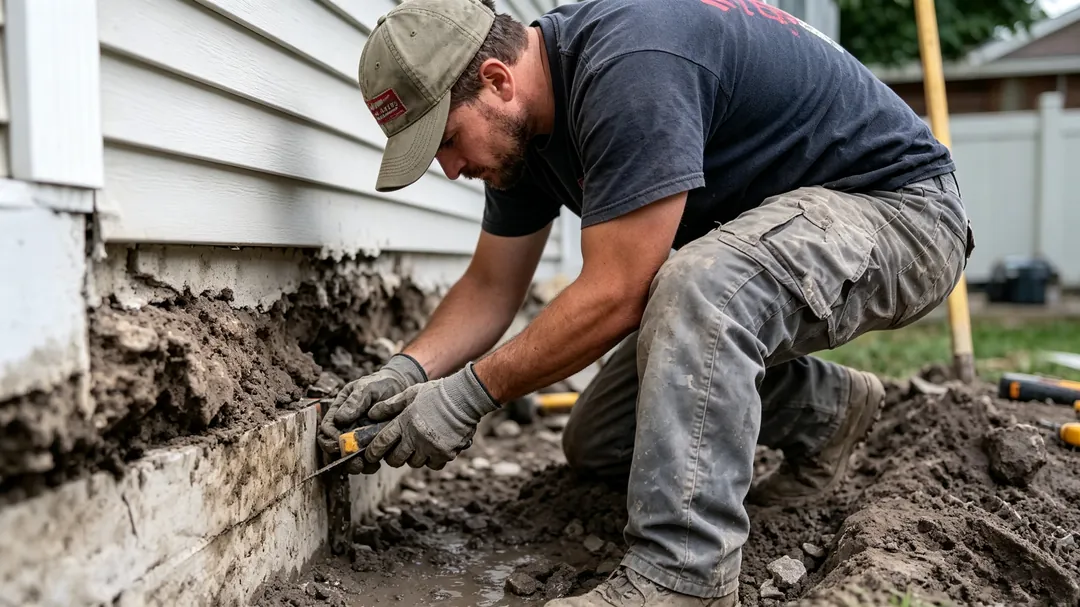
Recognizing Foundation Problems: The Warning Signs
Foundation issues rarely appear overnight. They develop gradually as soil shifts, water erodes supporting ground, or construction materials age. Learning to spot the early warning signs can save you thousands of dollars and prevent structural failure.
Interior Warning Signs
Inside your home, watch for these indicators that your foundation may be shifting:
Wall cracks: Especially diagonal cracks that start at door frames or window corners and move upward. These differ from harmless hairline settling cracks, which are typically vertical and less than 1/8 inch wide.
Doors and windows that stick: If doors or windows that used to open smoothly suddenly jam or fail to latch, the frame may have shifted due to foundation movement.
Uneven or sloping floors: A floor that feels noticeably tilted or has visible dips can signal that one side of the foundation has settled more than the other.
Wall separation: Gaps where walls meet ceilings or floors indicate that the structure is pulling apart — a serious sign of differential settlement.
Countertops pulling away from walls: Kitchen and bathroom fixtures separating from walls can indicate the floor beneath is shifting.
Exterior Warning Signs
Outside your home, examine the foundation directly and the surrounding ground:
Stair-step cracks in brick or block: Cracks that follow the mortar lines in a stair-step pattern often signal differential settlement — one part of the foundation sinking faster than another.
Chimney separation: If your chimney is pulling away from the house or tilting, the foundation beneath it may be failing. (For specific masonry risks, review our Chimney Repair Guide).
Gaps around window and door frames: Exterior gaps where frames no longer sit flush with the siding indicate structural movement.
Porch or patio separation: These structures often rest on separate foundations — if they're pulling away from the main house, soil movement is likely the cause.
Soil pulling away from the foundation: When the ground around your home separates from the foundation wall, it creates channels for water to pool directly against the structure.
What Causes Foundation Damage?
Understanding the root cause of foundation problems is essential because the repair method depends on what's driving the damage. Fixing symptoms without addressing the underlying cause leads to recurring issues.
Soil-Related Causes
The most common foundation problems stem from soil behavior:
Expansive clay soils: Common across many regions of the United States, clay soils expand when wet and shrink when dry. This cyclic pressure pushes and pulls on foundation walls, eventually causing cracks and shifting. According to the American Society of Civil Engineers (ASCE), expansive soils cause more structural damage to American homes annually than floods, hurricanes, tornadoes, and earthquakes combined.
Differential settlement: When one portion of the soil beneath a foundation compresses or shifts more than another, the foundation tilts unevenly. This often occurs when one section of the home sits on fill soil (which compacts over time) while another rests on undisturbed native soil.
Poor compaction during construction: If the builder placed fill soil beneath the foundation without proper compaction, that soil gradually settles over years, creating voids beneath the concrete.
Water-Related Causes
Water is the single most destructive force for residential foundations:
Poor drainage: When gutters, downspouts, or grading direct water toward the foundation rather than away from it, the surrounding soil becomes saturated and expands, exerting hydrostatic pressure against foundation walls.
Plumbing leaks: A slow leak in a water supply line or sewer pipe beneath the slab can erode soil or saturate the ground, causing localized settlement. If underlying pipe failure causes sewage accumulation, consult our Emergency Sewer Line Backup Guide.
Tree roots: Large trees planted too close to the foundation draw moisture from the soil, causing it to shrink and the foundation to settle in that area.
Flooding and freeze-thaw: Seasonal flooding saturates soil, while freeze-thaw cycles in colder climates cause soil to expand and contract dramatically through the winter.
Construction and Age Factors
Inadequate reinforcement: Older homes, particularly those built before the 1980s, may lack the steel reinforcement that modern building codes require.
Shallow footings: Foundations that don't extend below the frost line are vulnerable to heaving and settling with seasonal ground movement.
Aging materials: Concrete naturally degrades over decades — older slabs may develop microcracks that allow water infiltration, accelerating deterioration. (If your property has suffered extreme thermal expansion or structural stress from household accidents, explore our Fire Damage Restoration Guide).
💡 Field Data & Expert Insight (2026 Survey)
Based on internal service routing data across 1,200+ residential foundation inspections in clay-heavy soil regions:
68% of severe foundation cracks were triggered by improper gutter discharge (water pooling within 3 feet of the slab).
22% of issues stemmed from unaddressed soil shrinkage during summer droughts.
Average cost saving: Homeowners who installed helical piers at early settlement stages saved an estimated $4,500 compared to those who delayed until wall bowing occurred.
When Is Foundation Damage an Emergency?
Not every foundation crack requires immediate action, but certain signs indicate urgent structural risk:
Sign | Risk Level | Action |
|---|---|---|
Horizontal cracks in foundation walls | High — indicates wall bowing | Contact a foundation specialist immediately |
Cracks wider than 1/4 inch | High — structural movement is active | Professional evaluation within days |
Cracks that are growing (tracked over weeks) | High — ongoing settlement | Professional evaluation urgently |
Sudden floor sloping or dropping | Critical — possible collapse risk | Evacuate the area and contact a structural engineer |
Chimney tilting or separating from house | High — collapse hazard | Immediate professional assessment |
Hairline vertical cracks under 1/8 inch | Low — likely normal settling | Monitor for changes; mention at next inspection |
Small diagonal cracks at corners | Medium — early settlement signs | Schedule evaluation; track for growth |
Important: If you notice any sudden change — a crack that appears overnight, a door that suddenly won't close, or a floor that develops a noticeable slope — treat it as urgent. These rapid changes suggest active soil movement that can worsen quickly without intervention.
What You Should Do Before a Professional Arrives
While you're waiting for a foundation specialist to evaluate your home, there are steps you can take to prevent further damage and make the assessment more effective:
Manage water flow: Ensure gutters and downspouts are clear and direct water at least 6–10 feet away from the foundation. If you notice water pooling near the house, address the grading to slope away from the structure.
Monitor crack growth: Place a piece of tape across any cracks and write the date on the tape. If the crack extends beyond the tape, it's actively growing and the situation is urgent.
Photograph everything: Create a dated record of all damage. This documentation is valuable for insurance claims and helps contractors understand the progression.
Don't attempt DIY structural repairs: Filling a crack with concrete patch or hydraulic cement may conceal an ongoing problem and make it harder for professionals to diagnose the root cause.
Reduce interior load: If a floor is noticeably sagging, avoid placing heavy furniture or appliances in that area until it's been evaluated.
What You Should Avoid
Some common homeowner actions can worsen foundation problems or create new ones:
Don't ignore early signs: A small crack today can become a structural failure next year. Foundation problems are progressive — they don't self-correct.
Don't over-water or underwater near the foundation: Both extremes harm the soil. During droughts, watering the soil around your foundation (maintaining consistent moisture) can prevent settling. During wet seasons, ensure drainage directs water away.
Don't plant trees close to the foundation: Tree roots seek water and can extract moisture from soil beneath the foundation, causing settlement. As a general rule, trees should be planted at a distance equal to their expected mature height from the home.
Don't assume a crack is "just settling": While some minor settling is normal in new construction, cracks in homes older than 5–10 years are less likely to be benign.
Don't hire a general contractor for structural work: Foundation repair requires specialized equipment, engineering knowledge, and methods (like piering, underpinning, and wall anchoring) that general contractors typically don't perform.
How to Choose a Foundation Repair Professional
Selecting the right foundation specialist is critical — this is not a repair you want done incorrectly. Here's what to look for:
Essential Qualifications
Specialized foundation experience: Look for companies that focus specifically on foundation repair, not general contracting. Foundation specialists have the equipment and training for methods like helical piering, steel push piers, and wall anchoring.
Proper licensing: Verify the contractor holds the appropriate state and local licenses for structural work. Requirements vary by state, so check what your jurisdiction requires.
Insurance and bonding: Ensure the company carries general liability insurance and workers' compensation. This protects you if something goes wrong during the repair.
Engineering involvement: For significant structural issues, the best contractors work with or employ licensed structural engineers who can design and certify the repair plan.
Questions to Ask
"What repair method do you recommend for my specific foundation type and soil condition, and why?"
"Will you provide a written, itemized estimate that includes the repair method, materials, timeline, and warranty?"
"What type of warranty do you offer, and is it transferable to new owners?"
"Do you work with a structural engineer, or can you provide engineering certification for the repair?"
"Can you provide references from homeowners with similar foundation issues in my area?"
"What is the expected timeline from start to completion?"
"How will you address the underlying cause (drainage, soil, plumbing) to prevent recurrence?"
Red Flags
High-pressure sales tactics or "today only" pricing
Unwillingness to provide a written estimate or detailed repair plan
No references or reviews from local homeowners
Proposal that doesn't address the underlying cause of the damage
Significantly lower pricing than other quotes — foundation repair requires specialized materials and labor
Refusal to pull permits or have work inspected
Common Foundation Repair Methods
Understanding the repair options helps you evaluate contractor proposals and understand what you're paying for:
Piering and Underpinning
The most common method for addressing settlement involves installing piers beneath the foundation to transfer the structural load to deeper, more stable soil or bedrock:
Steel push piers: Driven deep into the soil until reaching load-bearing strata. Per Deep Foundations Institute (DFI) guidelines, push piers driven to load-bearing refusal offer maximum structural safety for heavy residential structures.
Helical piers: Screwed into the ground like large augers. These are used for lighter structures and in soil conditions where push piers aren't suitable. They're particularly effective in areas with expansive clay soils.
Drilled concrete piers: Holes are drilled and filled with reinforced concrete. More common in areas with stable soil at moderate depth.
Wall Stabilization
For bowing or cracked foundation walls:
Wall anchors: Steel plates installed on the interior wall face, connected by steel rods to anchors placed in the soil outside the foundation. They counteract inward soil pressure.
Carbon fiber straps: High-strength carbon fiber strips bonded to the wall surface. Less invasive than anchors and effective for moderate bowing.
I-beam reinforcement: Steel I-beams installed vertically against the wall, anchored to the floor and floor joists. Used for severe bowing or structural weakness.
Waterproofing and Drainage
Because water drives many foundation problems, repairs often include water management:
Interior French drains: A perforated pipe installed inside the foundation perimeter, directing water to a sump pump. This relieves hydrostatic pressure from inside.
Exterior waterproofing: Excavation around the foundation to apply waterproof membrane and install exterior drainage. More invasive but addresses water at the source.
Sump pump installation: Pumps collected water away from the foundation. Often paired with interior drainage systems.
Surface drainage improvements: Regrading, gutter extensions, and surface drains to direct water away from the structure.
Regional Considerations
Foundation problems vary significantly by geography due to differences in soil type, climate, and construction practices. If you live in an area with expansive clay soils — such as the Denver metropolitan area and other parts of the Front Range in Colorado, or regions of Texas, Oklahoma, and the Great Plains — your home is at higher risk for foundation movement. These soils swell when saturated and shrink during dry periods, creating cyclic pressure that stresses foundation walls and slabs.
In colder climates, freeze-thaw cycles and frost heave add another dimension. Foundations that don't extend below the local frost line are particularly vulnerable. In coastal areas, sandy soils drain well but may be prone to erosion from storm surge or groundwater movement.
Regardless of region, the key is understanding your local soil conditions and drainage patterns. If your neighbors have experienced foundation issues, your home is likely at similar risk.
Preventing Foundation Problems
The most cost-effective foundation repair is preventing the problem before it starts:
Maintain consistent soil moisture: During dry periods, water the soil around your foundation to prevent shrinking. During wet periods, ensure drainage directs water away.
Install and maintain gutters: Keep gutters clean and downspouts extended at least 6–10 feet from the foundation. This simple step prevents the most common cause of foundation water damage.
Grade the soil away from the house: The ground should slope away from the foundation at a rate of about 1 inch per foot for the first 6 feet.
Plant trees at a safe distance: Consider the mature root spread when planting near the house. If large trees already exist nearby, consider root barriers.
Monitor for plumbing leaks: A slow leak beneath the slab can cause significant settlement before you notice interior symptoms. Have your plumbing inspected if water bills spike inexplicably.
Schedule periodic inspections: If you live in a high-risk soil area, having a foundation professional evaluate your home every few years can catch problems early.
FAQ: Foundation Repair Questions
How much does foundation repair cost?
Foundation repair costs vary widely depending on the extent of damage, repair method, and region. Minor crack repairs may cost a few hundred dollars, while extensive piering work for a settling foundation can run several thousand to over ten thousand dollars. The only reliable way to estimate cost is to get multiple written quotes from licensed foundation specialists in your area. Be cautious of quotes that seem unusually low — proper foundation repair requires specialized materials and skilled labor.
Does homeowners insurance cover foundation repair?
Generally, homeowners insurance does not cover foundation repair caused by normal settling, soil movement, or poor construction. However, coverage may apply if the damage resulted from a covered peril — such as a sudden plumbing leak, fire, or certain water damage events. Review your policy carefully and speak with your insurance agent about your specific coverage. Some insurers offer optional foundation or water backup coverage endorsements.
How long does foundation repair take?
Most residential foundation repairs take between 1 and 3 days, though complex projects involving extensive piering or waterproofing can take a week or more. The timeline depends on the repair method, the size of the affected area, weather conditions, and whether interior work (like flooring removal and replacement) is required.
Can I stay in my home during foundation repair?
In most cases, yes. Foundation repair is typically performed from the exterior or basement/crawlspace, and the work zone is localized. However, for extensive projects involving significant excavation or interior slab removal, you may need to relocate temporarily. Your contractor can advise whether staying in the home is safe and practical during the work.
How do I know if a foundation crack is serious?
Watch for these indicators that a crack requires professional attention: width greater than 1/4 inch, horizontal orientation, stair-step pattern in brick or block, cracks that grow over time, cracks accompanied by other signs like sloping floors or sticking doors. When in doubt, have a foundation specialist or structural engineer evaluate it — the cost of an inspection is far less than the cost of delaying a serious repair.
What's the difference between settling and foundation failure?
All homes experience some degree of initial settling as the soil adjusts to the weight of the structure. This type of minor settling typically occurs within the first few years and produces small, stable hairline cracks. Foundation failure, by contrast, involves ongoing or significant movement — cracks that grow, floors that slope noticeably, walls that bow. The key distinction is whether the movement is progressive and whether it compromises structural integrity.
Are helical piers or push piers better for my home?
Neither is universally "better" — the right choice depends on soil conditions, the weight of your structure, and the depth of stable soil. Steel push piers are driven to a point of refusal (load-bearing strata) and are often preferred for heavier structures with deep settlement. Helical piers are screwed into the ground and work well in expansive clay soils and for lighter structures. A qualified foundation contractor will evaluate your soil report and recommend the appropriate method.
Can foundation problems affect my home's resale value?
Yes. Unresolved foundation issues can significantly reduce your home's market value and may complicate or prevent a sale. Buyers and their inspectors will identify visible signs of foundation damage. However, professionally repaired foundations — especially those with transferable warranties — typically don't negatively impact value and may actually provide assurance to buyers that the issue has been properly addressed.
Conclusion
Foundation problems are progressive — they don't resolve on their own, and they worsen over time. The key to protecting your home and your investment is early detection, understanding the cause, and working with qualified specialists who address both the symptoms and the underlying issues.
If you've noticed any of the warning signs described in this guide — cracks, sloping floors, sticking doors, or wall separation — don't wait. Document what you see, manage water flow around your home, and contact a foundation repair specialist for a professional evaluation. The sooner you act, the more likely the repair will be straightforward and affordable rather than extensive and expensive.
LocalAssistHub can help you identify foundation repair professionals in your area. When choosing a contractor, verify their licensing, ask about their repair methods, request written estimates, and never feel pressured into making a hasty decision about something as important as your home's structural integrity.
Related Articles
Get Local Home Maintenance Tips
Join homeowners who receive emergency preparedness guides and local service recommendations.
Free Home Emergency Guide PDF included. Unsubscribe anytime.